
Vapor barrier installation in Bel Air South MD - less ground moisture under your floors
Musty smell, damp dirt or cold floors over the crawl space? We cover the ground with a heavy sheet so less moisture works its way up.
Do I need a vapor barrier in my crawl space?
Vapor barrier installation in Bel Air South, MD means covering your crawl space floor with a heavy plastic sheet, also called a vapor retarder, so less ground moisture and soil gas rises into the framing under your house. If there's bare dirt or a torn old liner down there, you probably need one.
Most folks call because the floors over the crawl space feel cold, the house smells a little musty, or a home inspector shined a light on bare dirt under the house. The ground gives off moisture all the time, and with nothing over it that damp drifts up into the joists. If cold floors are the main complaint, the barrier usually goes in alongside crawl space insulation.
The price moves with the size of the crawl space, how hard it is to get into, how much old insulation and junk has to come out, which sheet you pick and whether we're lining a vented space or closing it up. The schedule mostly waits on water, because any leak or wet spot gets fixed first, and the written estimate after my visit lays out the scope and the order we'd work in.
- Stored boxes, old lumber and other debris come out of the crawl space before anything else happens.
- How you reach the space, a floor hatch or an outside door, shapes how we stage the work.
- If the vents get closed up, the fresh air your furnace or water heater needs is planned first.
What happens after you call about a crawl space vapor barrier?
Here's how a vapor barrier job goes with us, from the first call to the last look under the house. I'm the one you'll see at the start and the end, and our installers do the work in between.
Call or send us a note
Call (410) 836-5406, email hi@belairsouthinsulation.com or use the form, and we'll set up a time for me to come out. It helps to mention any standing water you've seen and whether the crawl space has vents.
I come out and look
I get into the crawl space myself, ask plenty of questions about smells, damp spots and what's stored down there, and tell you what I'd do first and why. You get a written estimate that spells out the sheet, what has to come out first and whether we're lining a vented space or closing it up.
Our installers do the work
Our installers clear the space and lay the barrier in the order we talked about. I check in while they work, so nothing gets covered up before it's right.
We go over it together
When the barrier's down, I go over the finished crawl space with you before we leave. I'd like you to know what's under your floor now and what to keep an eye on afterward.
What a crawl space vapor barrier job looks like
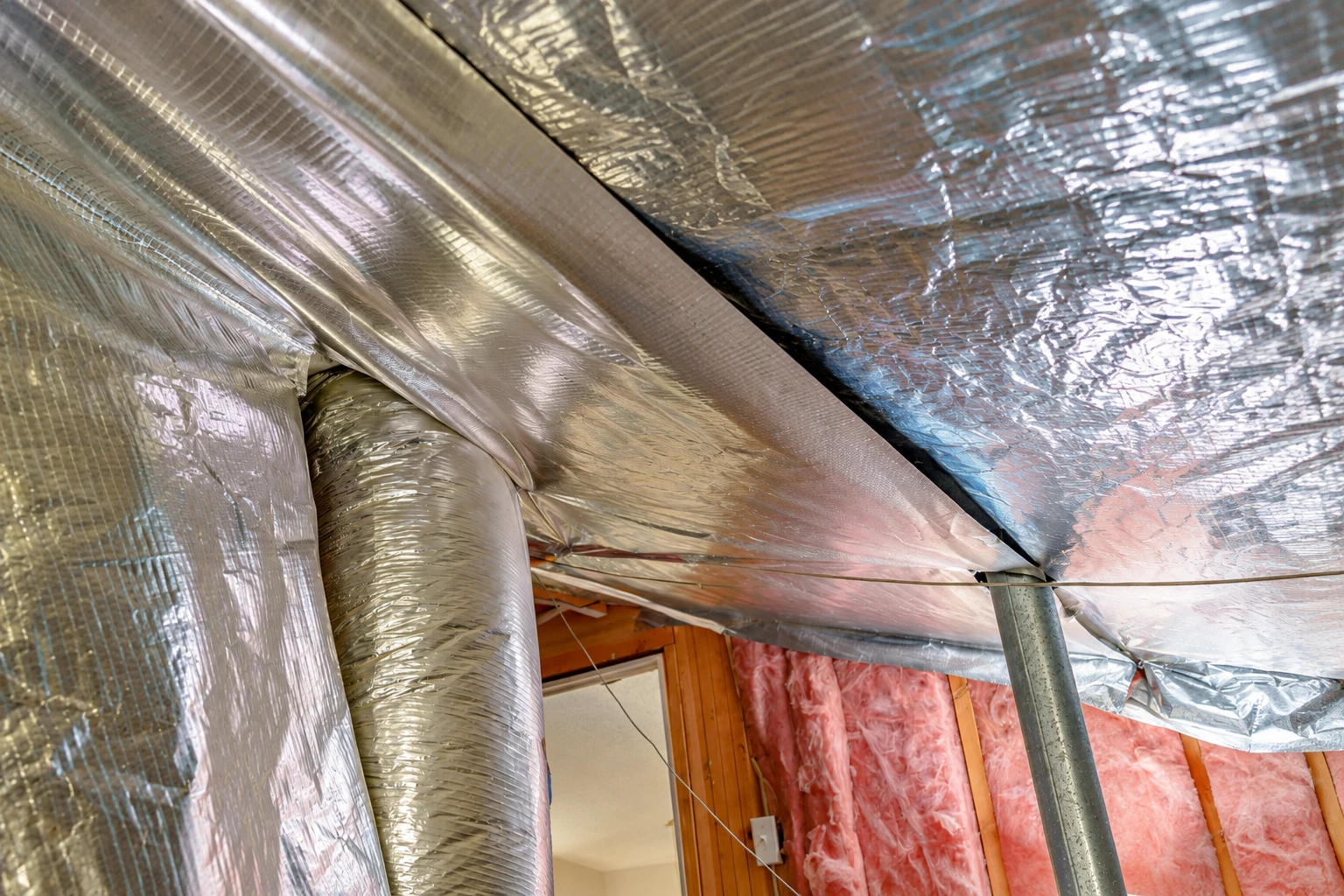
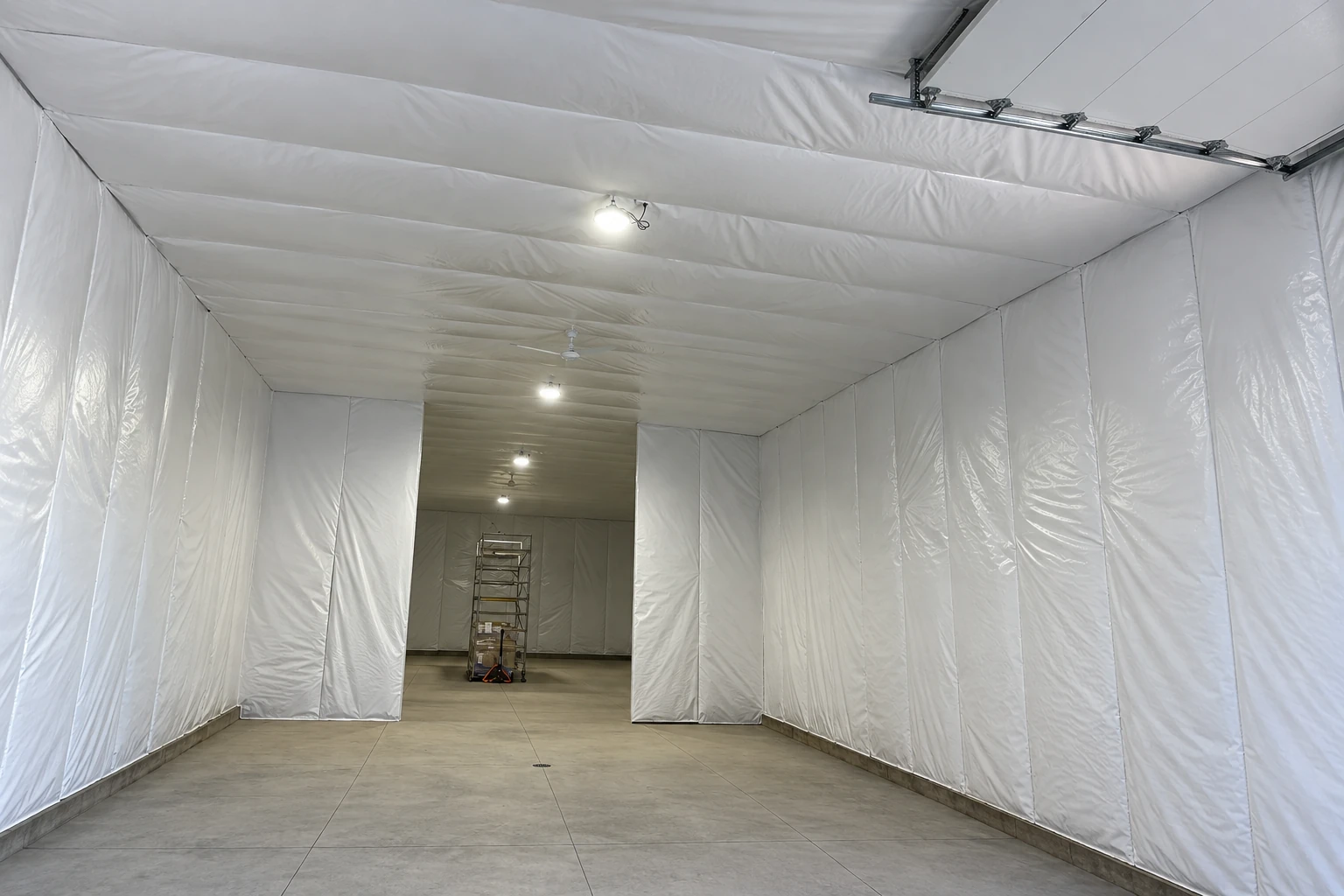
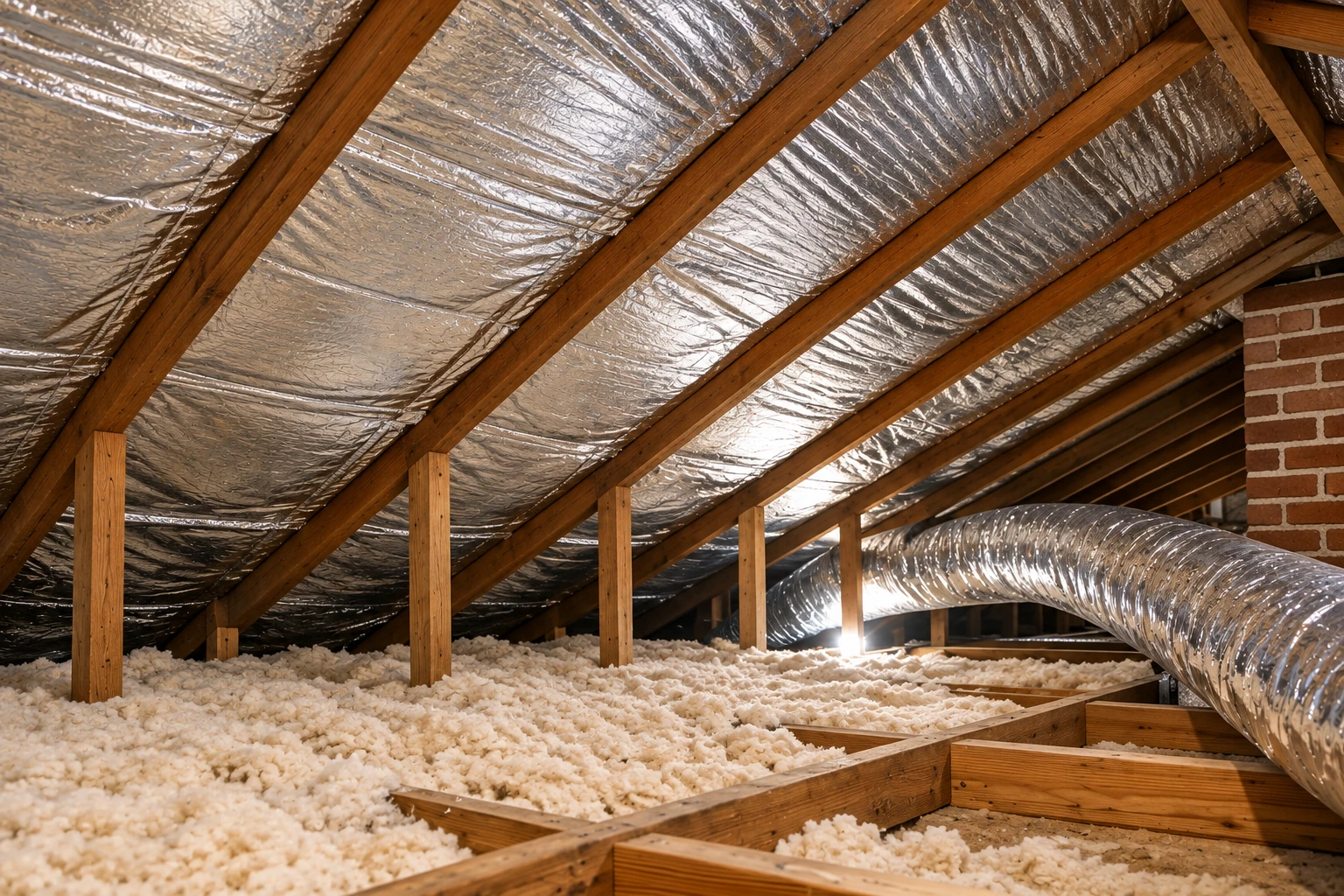
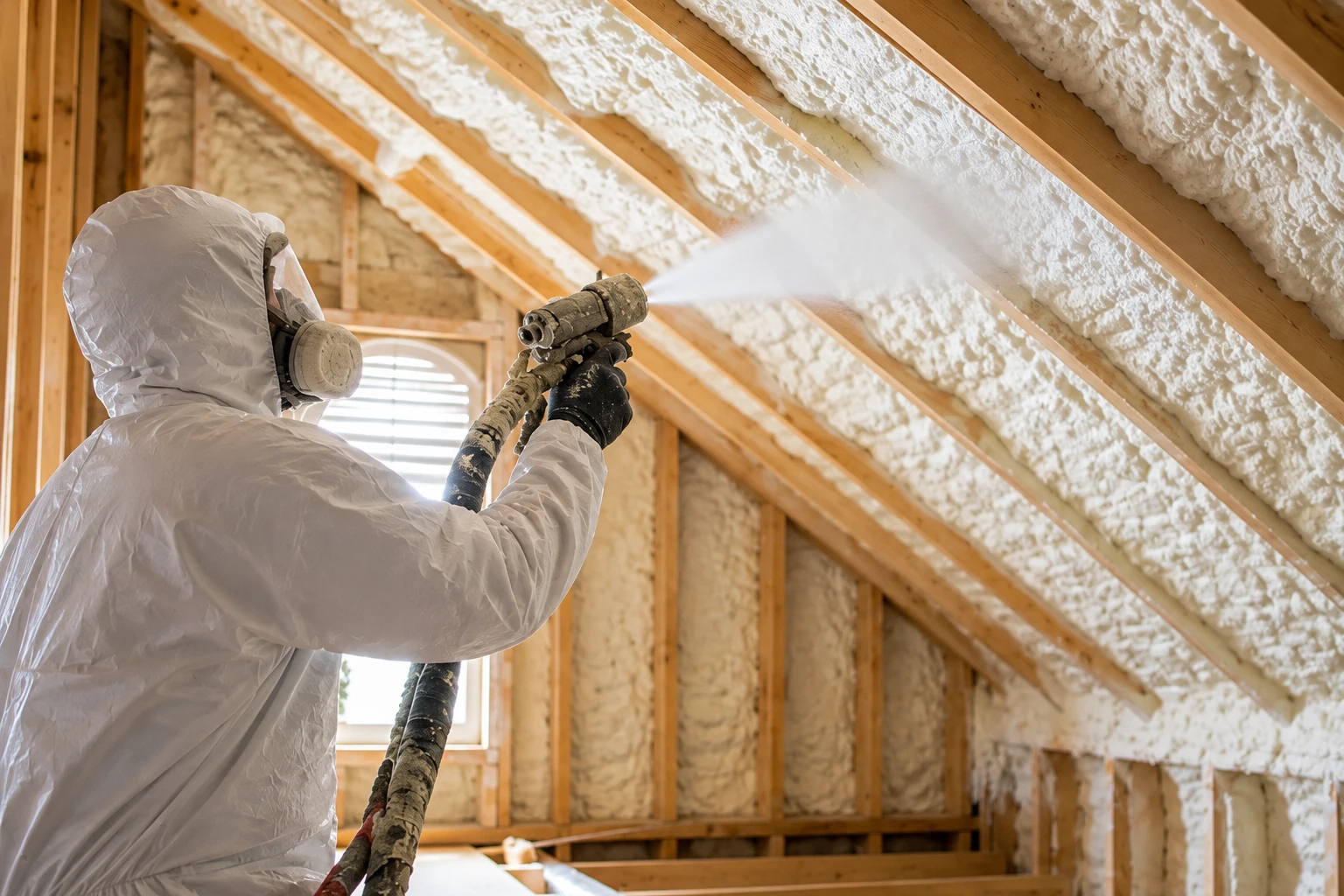
These photos show the kind of crawl space work this page is about, from bare dirt floors to a sheet run up the foundation walls. They're examples of the trade, not pictures of a particular house.
A worker in protective gear sprays foam insulation into exposed roof framing.
An attic with loose yellow insulation filling the floor between wooden joists.
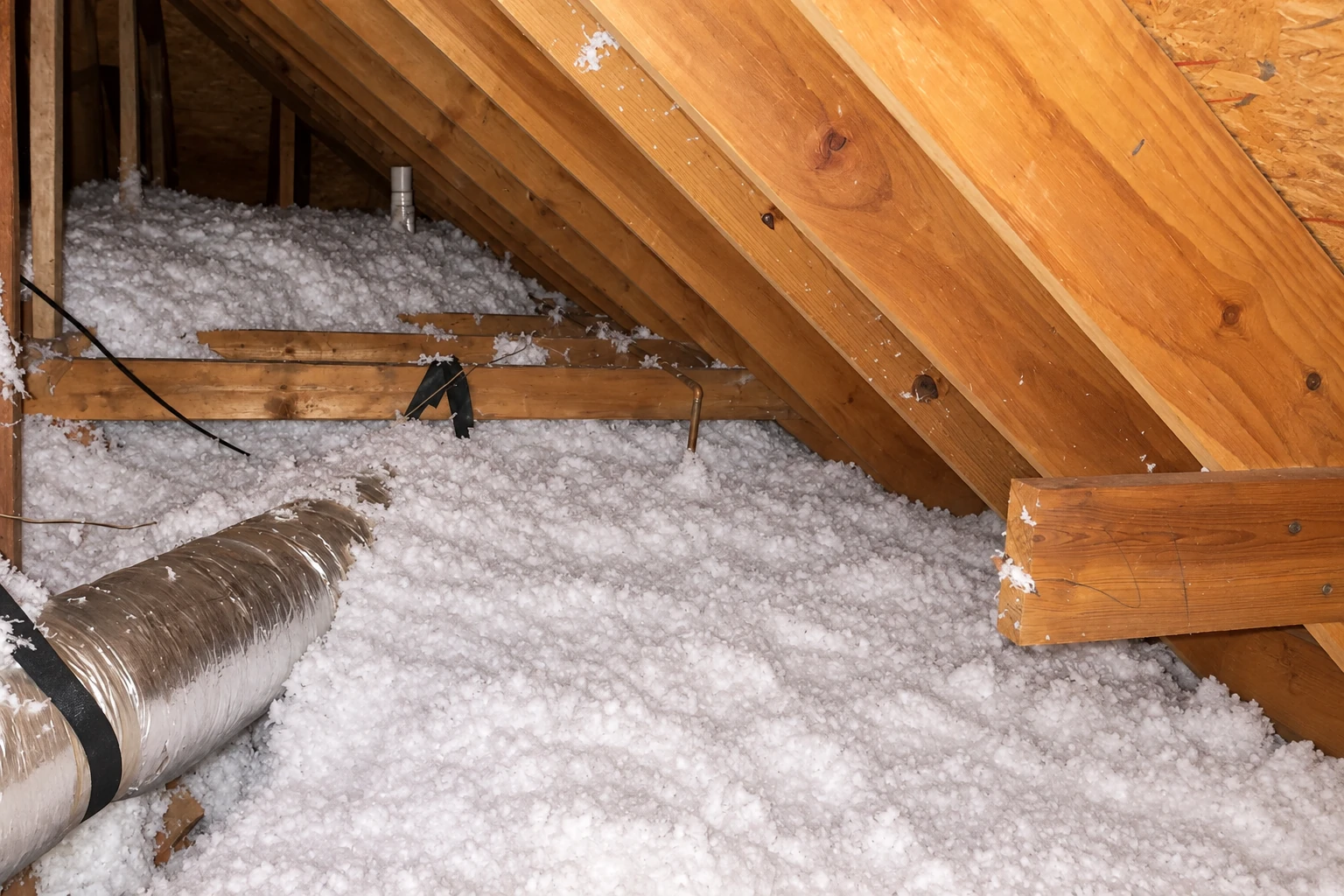
White blown-in insulation covers an attic floor beneath exposed wooden roof trusses.
A spacious attic has a deep layer of white loose-fill insulation across the floor.
A worker wearing a respirator uses a wide hose to remove loose insulation from attic floor joists.
Crawl space with a white plastic vapor barrier covering the floor and walls, with exposed joists, insulation, ducts, and pipes overhead.
Get a written vapor barrier estimate for your crawl space
Send the form or call (410) 836-5406, and we'll reply within one business day to set up a free on-site visit. I'll look at the crawl space and give you a written estimate, with no obligation to go ahead.
(410) 836-5406Questions about crawl space vapor barriers in Bel Air South
These are the questions I hear most while I'm kneeling at a crawl space hatch. If yours isn't here, ask me at the visit and I'll explain what I'm seeing down there.
What does a vapor barrier do in a crawl space?
A well-installed vapor barrier helps cut down the ground moisture and soil gases, radon among them, that rise from the dirt into your house. It isn't a radon test, though, and the Maryland Department of Health says to test your home with a radon test kit, because the gas is colorless, odorless and occurs naturally in Maryland.
What is the best thickness for a crawl space vapor barrier?
One federal energy guide calls for at least a 6-mil sheet, about six thousandths of an inch thick, and another guide for closing crawl spaces recommends at least 10-mil or a cross-laminated, puncture-resistant 6-mil sheet. If anyone crawls through to reach pipes or a furnace, I'd go with the tougher sheet because thin plastic tears under knees. Whoever you hire, ask which sheet their quote includes.
How much does crawl space encapsulation cost in Maryland?
Across Maryland, crawl space encapsulation with a vapor barrier and a dehumidifier usually runs about $6,000 to $10,500 per job. That figure is for a fully sealed crawl space, so a plain liner in a vented one is a smaller job, and your own number comes from the written estimate after I've seen the space.
What is the best way to handle standing water before a vapor barrier goes in?
Get the water out and fix where it's coming from first, because a sheet laid over a wet floor just hides the problem. It's usually a leaking pipe overhead or groundwater coming in, and when the fix is plumbing work, we bring in a licensed plumber for that part.
How do I check that a vapor barrier contractor is licensed in Maryland?
Ask for their license from the Maryland Home Improvement Commission, since that's the license a contractor needs to do home improvement work for a homeowner in Maryland. Applicants have to file proof of $50,000 in current liability insurance to get it, and we're licensed and fully insured.
Do I have to leave the house while a crawl space vapor barrier goes in?
Usually not, because laying a plastic sheet doesn't involve spraying anything, so you, the kids and the pets can stay put. If your plan also calls for spray foam down there, I'll tell you at the estimate when it's fine to come back inside.
Vapor barrier installation around Bel Air South
Before work starts, I check with Harford County's permit office or whichever office covers your address, and if your job needs a permit we take care of it. We do the same work across Harford County and into nearby Baltimore County.