
Bel Air South Spray Foam InsulationBel Air South Spray Foam Insulation(410) 836-5406

Skilled Insulation Contractor in Bel Air South MD - Rooms That Stay Comfortable

Bel Air South Spray Foam Insulation air seals and insulates drafty attics in and around Bel Air South, including Bel Air and Abingdon. We also insulate basements and crawl spaces in homes that sit on damp clay ground.

Leaks sealed first
We close the gaps before any insulation goes in.
Explained in plain words
We show you what's going on before you decide.
Honest about small jobs
If less work makes sense, we'll tell you so.
Built for lived-in homes
We contain the dust and plan around your family.
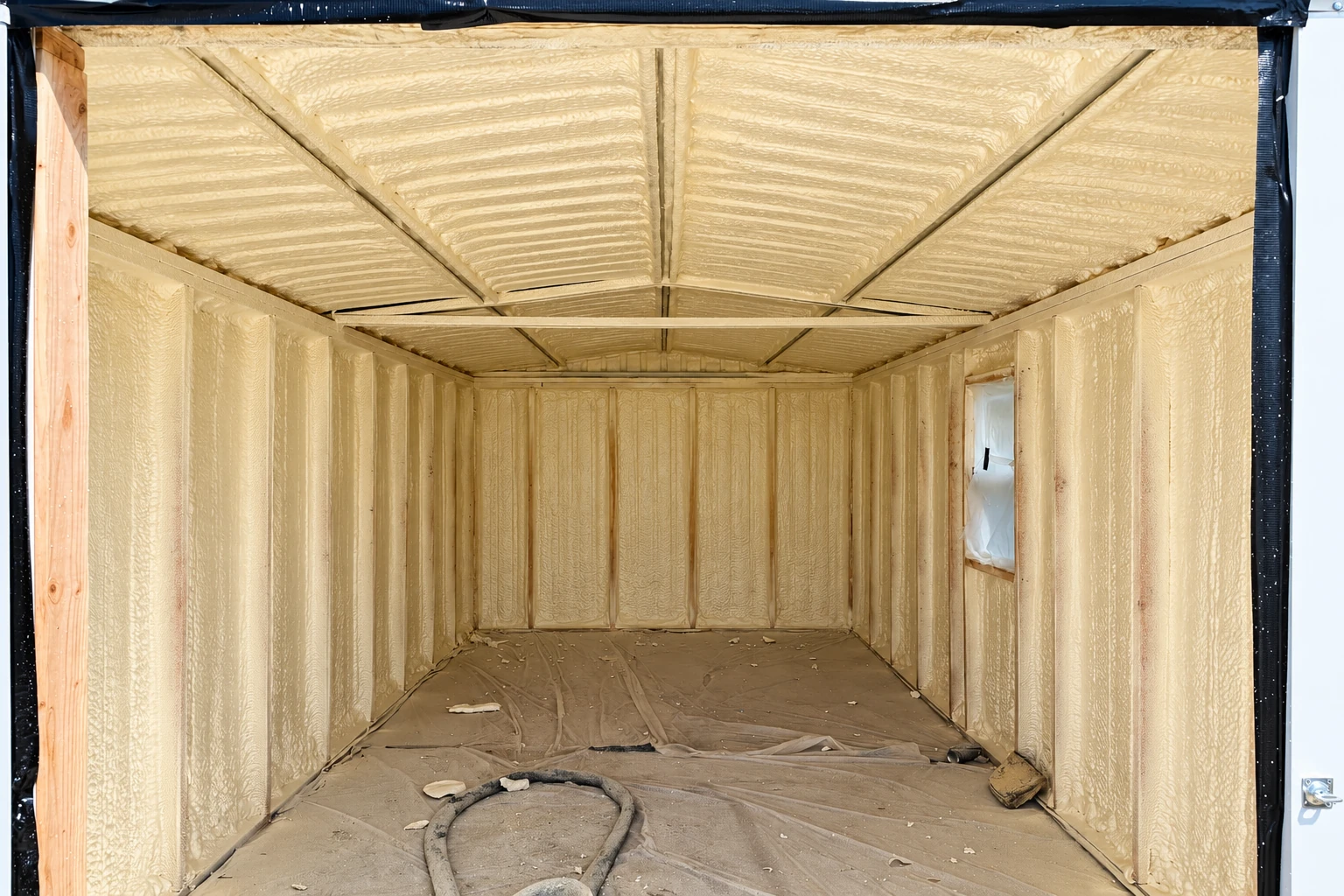
A small framed structure is coated inside with tan spray foam across its walls and pitched ceiling, with protective sheeting on the floor.
  • Licensed and fully insured.
  • Free quotes on site.
  • We reply within 1 business day.

Insulation contractor services in Bel Air South, MD

Bel Air South Spray Foam Insulation is an insulation contractor in Bel Air South, MD, and most calls start with a hot upstairs, a drafty room over the garage or a power bill that seems too high. We offer 16 services, and on any of them the price mostly comes down to what's already up there and what shape it's in, whether old material has to come out, how many gaps need sealing and whether foam or loose fill fits better. The schedule turns on that same cleanout and on any electrical or heating work a licensed trade has to handle first. Your written estimate spells out both for your house.

  • Spray foam insulation

    Spray foam goes on wet and expands into the gaps, so it seals air and insulates in one pass. It costs more than loose fill, so we mostly suggest it where ductwork runs through the attic or the space is hard to seal any other way.

    Explore service
  • Attic insulation

    Hot upstairs and chilly in winter? We seal the attic floor first, then bring the insulation up to an even depth, with the edges as full as the middle.

    Explore service
  • Blown-in insulation

    Blown-in insulation is loose fill we blow through a hose across the attic floor or into closed walls. It's usually the sensible way to top up an attic that already has some insulation.

    Explore service
  • Home insulation

    Not sure where your house is losing heat? We look at the attic, walls, basement and crawl space together and tell you which one to tackle first.

    Explore service
  • Insulation removal

    When old insulation is soaked, flattened or full of droppings, we pull it out and clean the space before anything new goes in, because covering it over leaves the problem in place.

    Explore service
  • Crawl space insulation

    We insulate crawl spaces so the floors above them stop feeling cold underfoot. Before we do, we check for standing water or damp, since insulation can't fix a wet crawl space.

    Explore service
  • Wall insulation

    Do your outside walls feel cold to the touch? We can blow insulation into finished walls through small holes and close them back up, so you don't have to tear out drywall.

    Explore service
  • Air sealing services

    Air sealing is closing the gaps around pipes, wiring, can lights and the hatch before any insulation goes in. It's the step that lets the insulation actually do its job.

    Explore service
  • Basement insulation

    We insulate basement walls and the wood framing along the top of the foundation to take the chill out of the lower floor. Yards around here often drain slowly, so we look for moisture before we start.

    Explore service
  • Closed-cell foam insulation

    Closed-cell foam is a dense foam that blocks moisture as well as air, which suits basement walls and crawl spaces. It costs more, so we save it for the spots where that moisture resistance matters.

    Explore service
  • Open-cell foam insulation

    Open-cell foam is a softer, lighter foam that seals air and quiets sound, often sprayed on attic rooflines and inside walls. It costs less than closed-cell but doesn't block moisture, so we keep it out of damp spots.

    Explore service
  • Commercial insulation

    We also insulate offices, shops and other commercial buildings, using the same seal-first order we follow in homes.

    Explore service
  • Crawl space vapor barrier

    A crawl space vapor barrier is heavy plastic sheeting laid over the dirt floor and up the walls, so ground moisture stays out of the house. We usually put one down before insulating a crawl space that sits on damp ground.

    Explore service
  • Vapor barrier installation

    Wondering whether your walls or basement need a vapor barrier? We'll tell you where one helps and where it would trap moisture, then install it in the right spot.

    Explore service
  • Attic air sealing

    This is the job we're best known for. We seal the leaks around lights, pipes, wiring and the attic hatch, and we keep the eave vents clear so the attic can still breathe.

    Explore service
  • Retrofit insulation

    Retrofit insulation means adding insulation to a house that's already built and lived in, through the attic, walls or crawl space. Lived-in houses are where we do most of our work.

    Explore service

Insulation work, up close

These photos show the kinds of insulation work this trade covers, from attic floors to foam-sprayed walls. They're general examples, so ask us during your visit what would actually suit your house.

Interior walls of a framed room coated with pale spray foam insulation, with exposed ceiling joists and black-framed windows.
Attic rafters and sloped roof covered in white spray foam, above wall cavities filled with pink fiberglass batts.
Unfinished room with green insulation between ceiling joists and wall studs, with exposed framing and a white-framed window.
Crawl space with a white plastic vapor barrier covering the floor and lower walls beneath exposed joists and ductwork.

Why homeowners in Bel Air South call us about insulation

We do insulation in houses people are living in, not empty new builds. Here's how we work and why, so you can judge whether it fits your home before anyone climbs into the attic.

We seal the leaks before we insulate

A lot of hot upstairs rooms and cold floors come from air leaking through gaps, not from too little insulation. Warm air slips out around can lights, plumbing pipes, wiring holes and the attic hatch, and loose fill laid over those gaps just lets the draft blow right through it. That's why we close those gaps first, before a single bag of insulation goes in.

Once the leaks are closed, topping up blown-in insulation usually does the rest for a lot less than foam. Spray foam earns its higher price when the ductwork runs through the attic, because it seals and insulates in one coat. Either way, you end up with a house that feels the difference. If that's how you want it done, send us a note or call (410) 836-5406.

  • Told when it's not worth it

    If topping up what you have, or sealing a few gaps and stopping there, makes more sense than a full job, I'll say so on the spot. Sometimes the honest answer is that your attic is fine as it is, and I'd rather you keep that money.

  • Dust kept out of your rooms

    Most of our work happens in houses where families live, so we contain the dust around the hatch and the work area and plan the day around school runs, naps and pets. Ask what you'll need to move, and we'll tell you before the crew shows up.

  • Problems fixed before they're covered

    Fresh insulation laid over soaked or droppings-filled material just hides the trouble, and buried eave vents can leave moisture in the framing. We look for those first, keep the vents clear and fill the edges as deep as the middle, so nothing bad ends up sealed in.

  • Licensed trades for wiring and pipes

    Insulation work sometimes turns up a wire, pipe or duct that needs attention. When it does, we bring in a licensed electrician, plumber or heating contractor for that part, since in Harford County those permits go through licensed or registered master tradespeople, not an insulation crew.

What happens after you call us about insulation

Every job follows the same four steps, from your first call to the walkthrough at the end. Here's what each one looks like from your side, so nothing about the visit or the work catches you off guard.

  1. Call or send a note

    Call (410) 836-5406 or send us a note through the form and tell us what's bothering you, whether it's a hot bedroom, cold floors, a bill that keeps climbing or a bigger project you're planning. We get back to you within one business day to set up a visit at a time that suits you.

  2. I look and explain

    I come out myself and look at the attic, walls, basement or crawl space, and I ask a lot of questions, because how your house feels tells me where to look. Then I walk you through what I'd do first and why, and you get a free written estimate with no obligation.

  3. Our installers do the work

    Our installers do the job in the order we talked through, so what you approved is what gets done. I check in while they work, and if a question comes up along the way, you've got someone who already knows your house and can answer it in plain words.

  4. Walk the finished job

    Before we leave, I go over the finished job with you, show you what got sealed and how evenly the insulation sits, edges included, and answer whatever questions are left. I hope you come away understanding your house a little better than when we started.

Who we are and how we got into insulation

I started out insulating new houses for builders, and after a few years I wanted to work in homes where families already live. We've been doing that since 2017. Lived-in houses taught me that every attic, wall and crawl space has its own story, which is why I look carefully and ask questions before I quote anything.

We're based in Bel Air South and work across Harford County and into nearby Baltimore County. What I care about most is the order of the work, so leaks and safety concerns get sorted out before anything is covered up. I also like it when you understand your house a little better after we've gone. You can read more about us.

  • Licensed and fully insured. Satisfaction guaranteed on every job.
  • Best known for attic air sealing and insulation done in the right order.
  • Plenty of calls come before a bigger project, so insulation gets planned right.

Cities we serve around Bel Air South

Bel Air South Spray Foam Insulation is based in Bel Air South, MD, and the 12 cities below each have a page of their own, from Joppatowne to Fallston. We work in plenty of other cities around them too, so call even if yours isn't listed.

Questions homeowners ask about insulation in Bel Air South

These are the questions we hear most on estimate visits, from what to move to when you can come back inside. If yours isn't here, ask it when you call and I'll walk you through it.

Are insulation estimates free in Bel Air South?

Yes, our estimates are free, done at your house and come with no obligation. I'd rather see the attic than guess over the phone, because the inches already up there, any damage and the gaps I find decide what your house actually needs.

How do I get my house ready for an insulation crew?

Clear a path to the attic hatch, crawl space door or basement wall we'll be working on, and move anything stored right in the work area. I'll point out anything else at the estimate visit, so there's no scramble the morning of.

Do we have to leave the house during spray foam insulation?

Usually not for air sealing or blown-in work, but spray foam is different. With foam, you, your kids and your pets stay out until the re-entry time, which is when you can come back in, and we go by the foam maker's instructions on that and tell you the timing before we start.

Should air sealing be done before adding attic insulation?

Yes, air sealing goes first, because once loose fill or foam covers a gap around a light, pipe or hatch, it's hard to get back to. Where a permit applies, Harford County's building inspections office says work should stay uncovered until it's inspected and approved, so we plan the order around that.

What should I compare between two insulation estimates?

Compare what each one seals, how deep the insulation goes and where, and whether old material comes out, because a lower number often leaves out the sealing. Also check that the contractor holds a Maryland Home Improvement Commission license, which the state requires of anyone soliciting or doing home improvement work, even with a license from another state.

Do I need a permit to insulate my attic in Maryland?

It depends on the job, so before work starts I check with the office that covers your address and take care of the permit if one's needed. For homes in Harford County, that's the Department of Inspections, Licenses and Permits, and you can call it at (410) 638-3122 with code questions.

Tell us what's going on in your attic or crawl space

Send the form and we'll get back to you within one business day to set up a visit. I'll come out, look things over and give you a free written estimate, with no obligation to go ahead.

(410) 836-5406
(410) 836-5406Get an estimate