
Commercial insulation in Bel Air South MD - a quieter building that holds its heat
Is your shop or office drafty, loud or costly to heat? We insulate walls and roofs so the space stays comfortable and quieter.
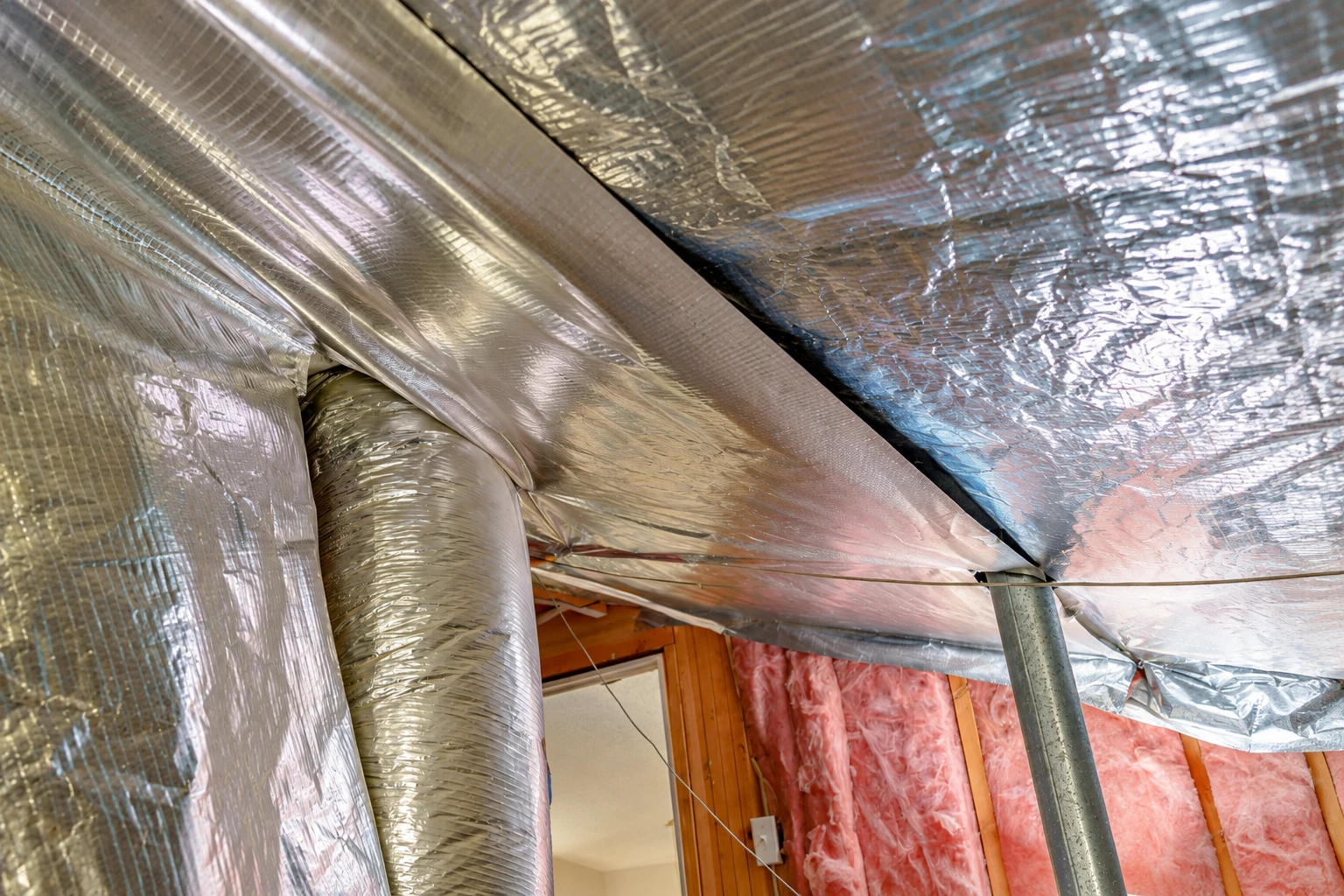
How do you insulate a commercial building in Bel Air South?
Commercial insulation lines the exterior walls and roof of a business building so the whole shell holds its heat in winter and its cooling in summer, and at Bel Air South Spray Foam Insulation we do it for shops, offices and metal buildings in Bel Air South.
Most calls on commercial work come from the person who runs the building, not the one who built it, and the complaint is usually a space that's drafty, loud or costing too much to heat and cool.
We've been at this since 2017, based in Bel Air South and working across Harford County and into nearby Baltimore County, and I'd rather look at your building and tell you what's worth doing than guess at it over the phone.
- In a metal building, the insulation is the main layer in both the walls and the roof.
- Price moves with the building type, the roof, the size and how much old material comes out.
- The schedule turns on how you use the space and when Harford County's inspections fall.
What happens when you call us about commercial insulation?
I'm the one who comes out to walk your building and go over the finished job, and our installers do the work in between. Here's how a commercial job usually runs.
Call or send us a note
Call (410) 836-5406 or email hi@belairsouthinsulation.com, and we'll set up a time for me to come see the building. It helps to have the building type, roof type, rough size and any planned electrical, plumbing or HVAC work ready.
I walk the building with you
I come out myself, look at the walls, roof and any crawl space or basement, and ask a lot of questions about how you use the place. Then I walk you through what I'd do first and why, and you get a written estimate.
Our installers do the work
Our installers work in the order we talked about, and I check in on the job while they're there. If something surprising turns up once a wall or roof is open, I'll tell you before we go any further.
We go over the finished job
Before we leave, I walk the finished work with you and show you what we did and why. Most folks come away understanding their building a little better than when we started.
What commercial insulation looks like before the walls close up
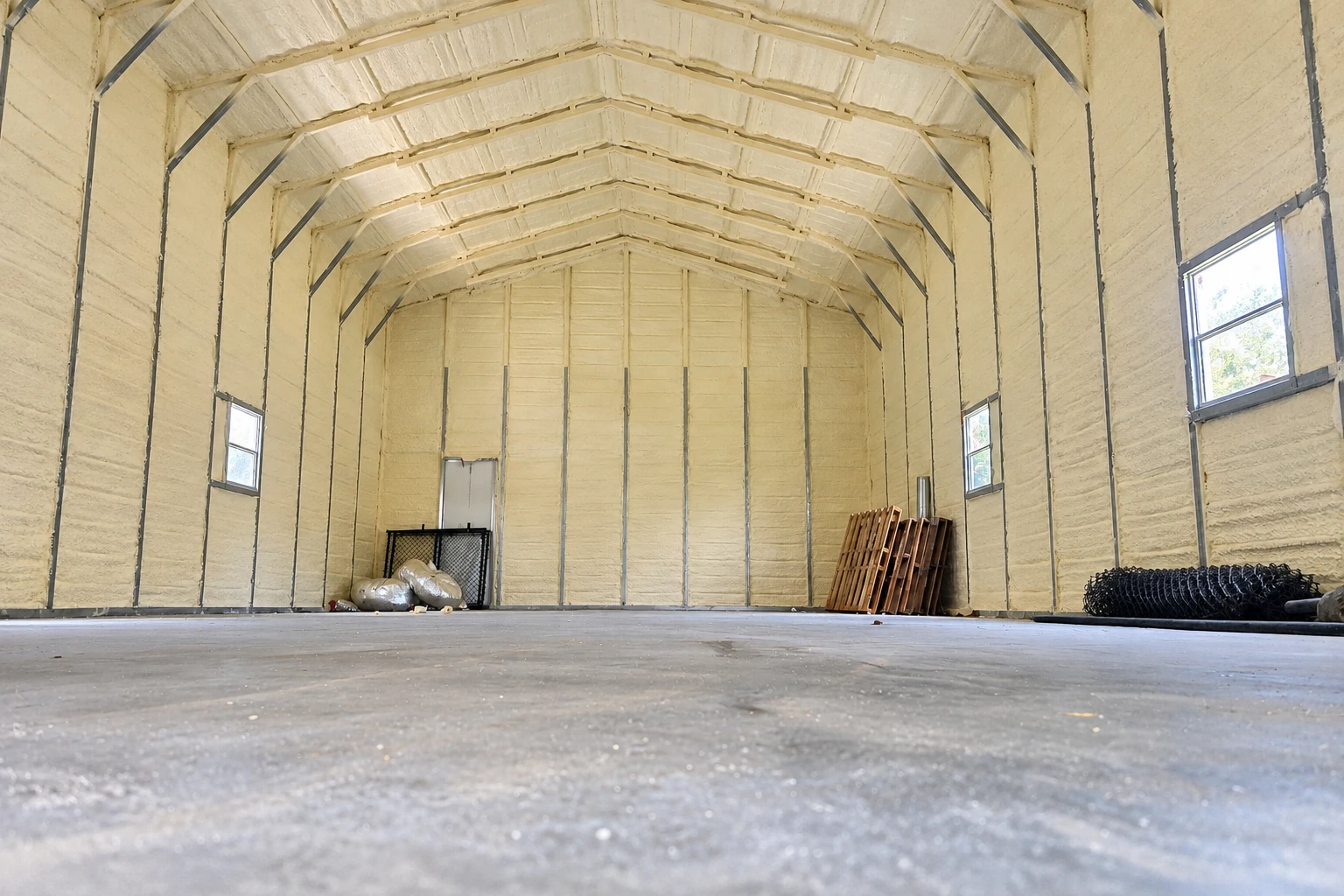
These photos show the kind of work commercial insulation involves, from the bare frame to the finished layer. They're examples of the trade, so you can picture the steps before anything gets covered.
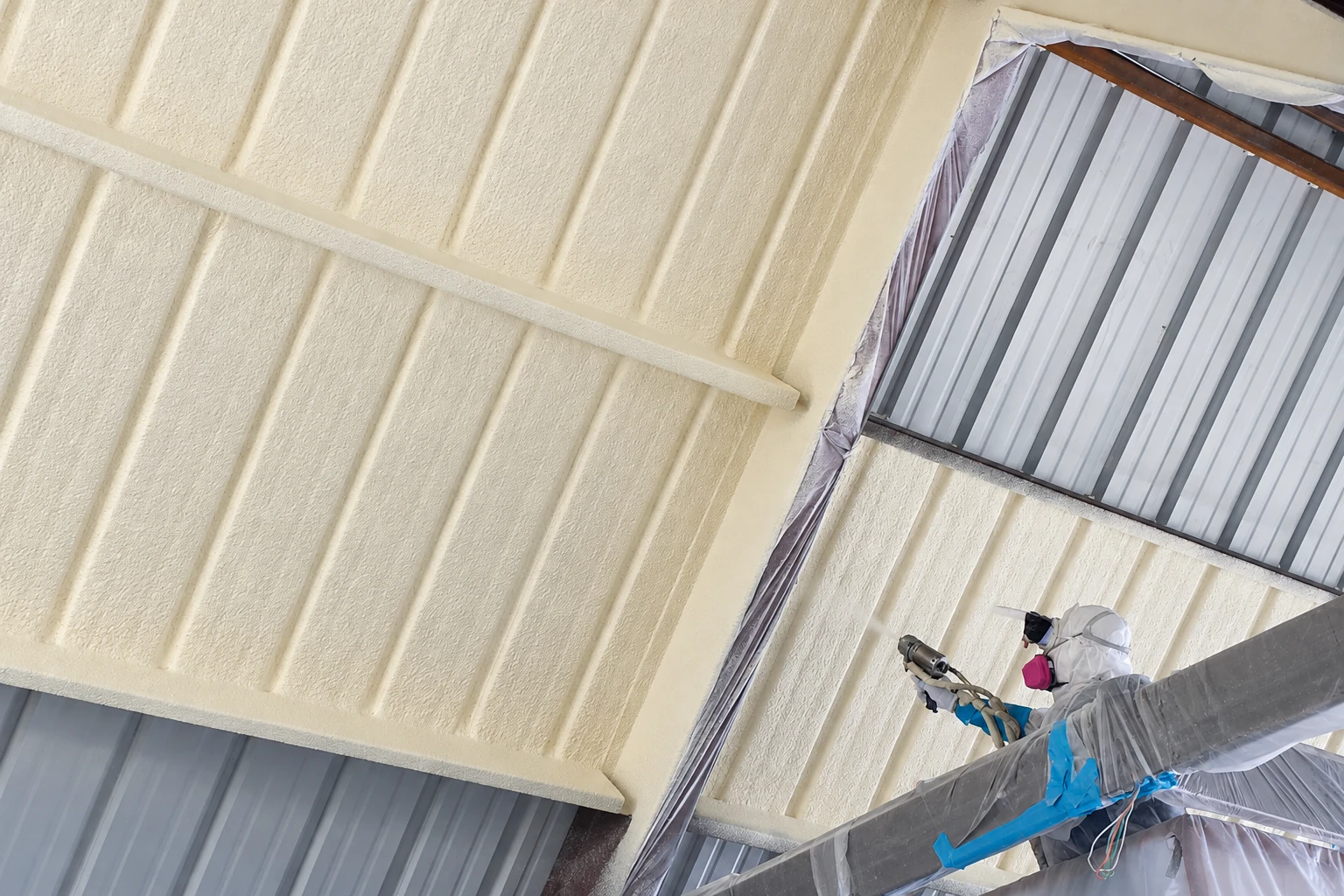
A worker in protective gear sprays foam insulation into exposed roof framing.
An attic with loose yellow insulation filling the floor between wooden joists.
White blown-in insulation covers an attic floor beneath exposed wooden roof trusses.
A spacious attic has a deep layer of white loose-fill insulation across the floor.
A worker wearing a respirator uses a wide hose to remove loose insulation from attic floor joists.
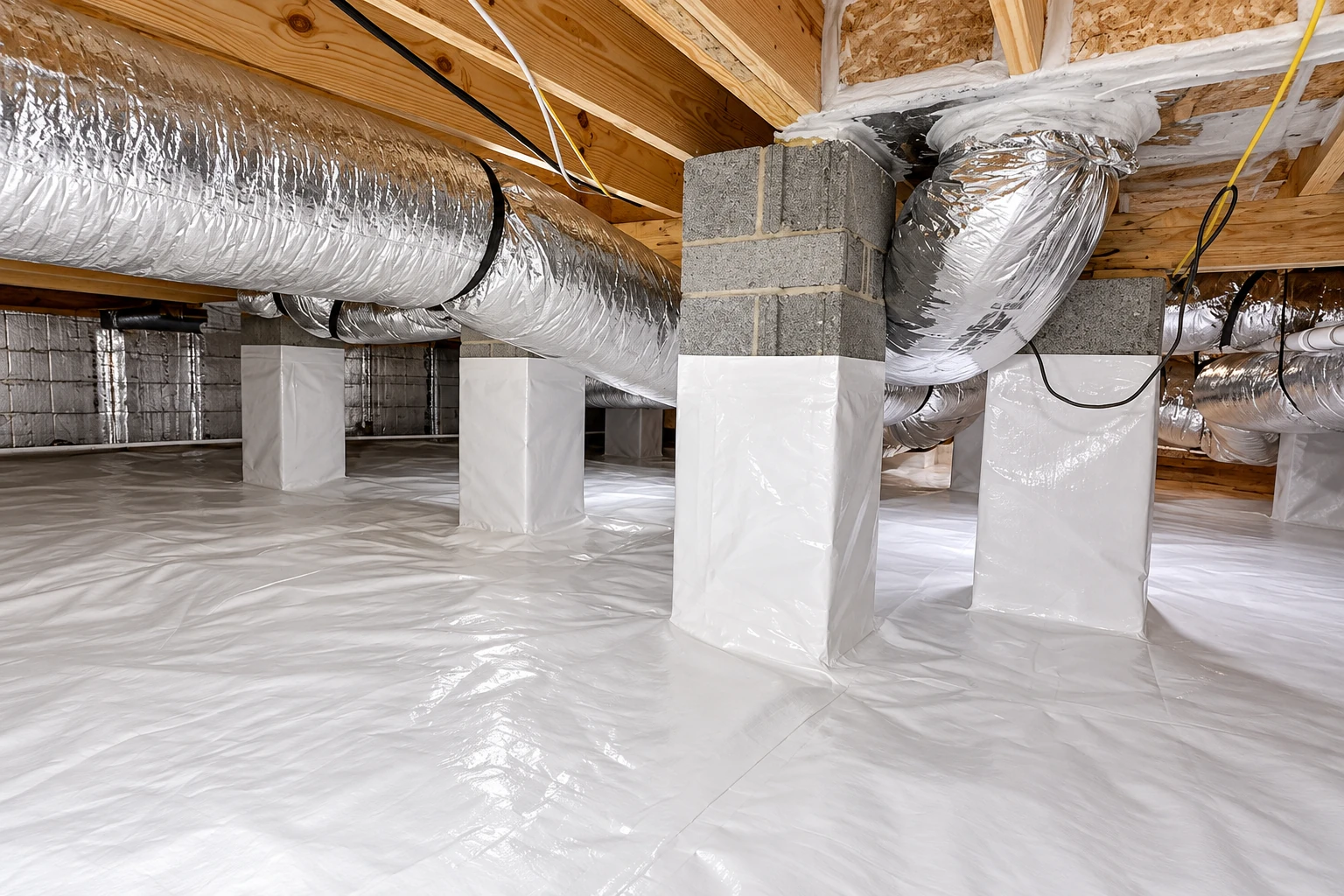
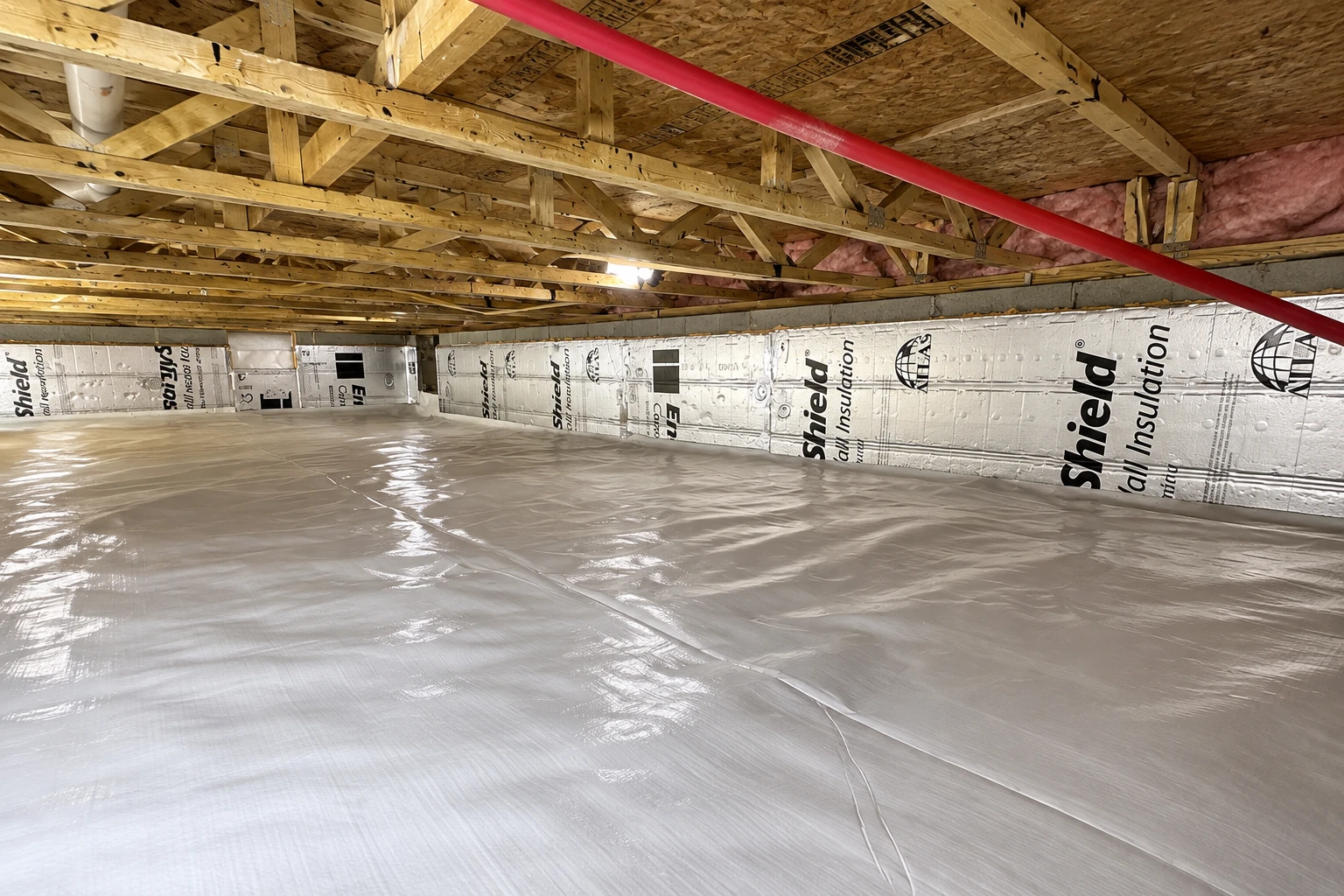
Crawl space with a white plastic vapor barrier covering the floor and walls, with exposed joists, insulation, ducts, and pipes overhead.
Get a written estimate for insulating your building
We reply within one business day to set up a free on-site visit, and there's no obligation. After I've walked the building, you get a written estimate, with satisfaction guaranteed on every job.
(410) 836-5406Questions building owners ask about commercial insulation here
These are the questions I hear most from people who run shops, offices and metal buildings around Bel Air South. If yours isn't here, call (410) 836-5406 and I'll talk it through.
How is a metal building usually insulated?
Metal buildings are traditionally insulated with fiberglass rolls faced with a flexible vapor retarder, a sheet that holds back moisture, draped over the frame with the facing toward the inside. The outer metal skin then closes it in, so that first layer usually goes in with the crew that puts the building up, and on an existing building we're often adding to it or fixing what's gone wrong.
Will insulation make my metal building quieter?
Yes, insulation in a metal building cuts down a lot of noise from both outside and inside. It blocks outside sound from coming in and soaks up the sound bouncing around inside, so the same layer that holds your heat makes the place quieter to work in.
How do I schedule finish crews around Harford County insulation inspections?
Book your drywall and ceiling crews for after the county's checks, because Harford County's standard inspection list includes an insulation inspection before interior finish goes on and a ceiling inspection before ceiling tiles go in. On a permitted job, the permit holder tells the county when work is ready, and it stays uncovered until it's inspected and approved. The county also issues a final Use and Occupancy Certificate for commercial construction once the project is complete and before anyone moves in.
Who handles permits for electrical, plumbing or HVAC work that comes up during an insulation job?
In Harford County, a licensed master electrician, plumber or HVACR contractor gets that separate permit. If our work turns one of those up, we bring in a licensed trade for that part, so you're not left chasing it down yourself.
How much does commercial insulation cost in Bel Air South?
Your number comes from the written estimate after I've walked the building, because I won't guess at a commercial price over the phone. Foam costs more than faced rolls or rigid board, old insulation that has to come out adds to the job, and getting the work done before interior finishes go up keeps you from paying to open walls later.
How do I know an insulation contractor is setting up my building right?
Ask where the air barrier goes and how it meets the insulation, because building science guidance says that layer, the one that stops air moving through the wall, can sit inside, outside or on both sides and works when it touches the insulation. I'll point it out when I walk you through what I'd do first and why.
Commercial insulation in Bel Air South and around Harford County
Harford County's permit list names electrical, plumbing and mechanical work but not insulation, so I check with the office covering your address and handle any permit needed. We're licensed and fully insured, and we see lots of metal shops here.