
Crawl space vapor barrier in Bel Air South, MD - a dry crawl space under your floors
Musty smell or damp air under the house? We find where the water's getting in, then seal the ground so the crawl space stays drier.
Does my crawl space need a vapor barrier?
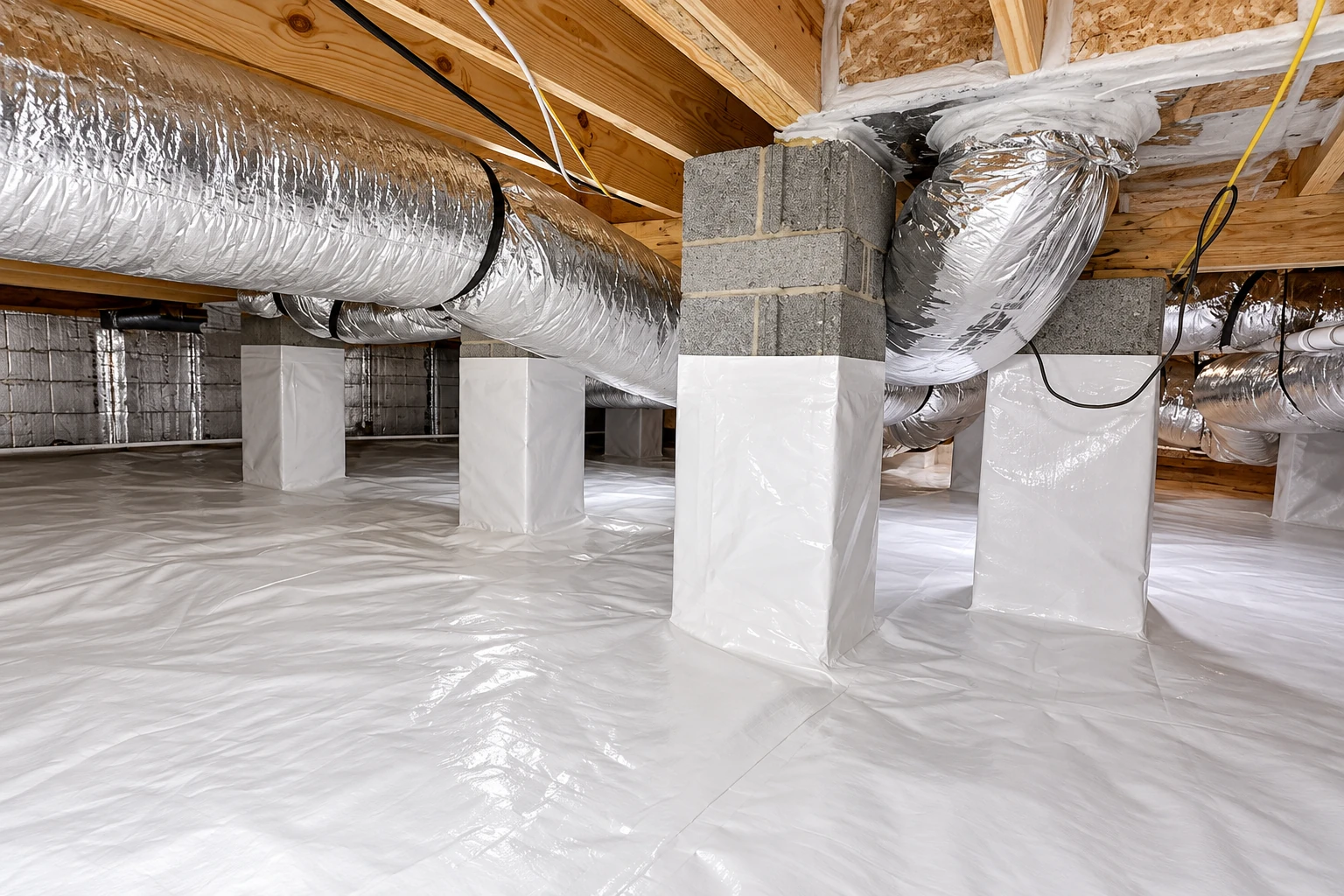
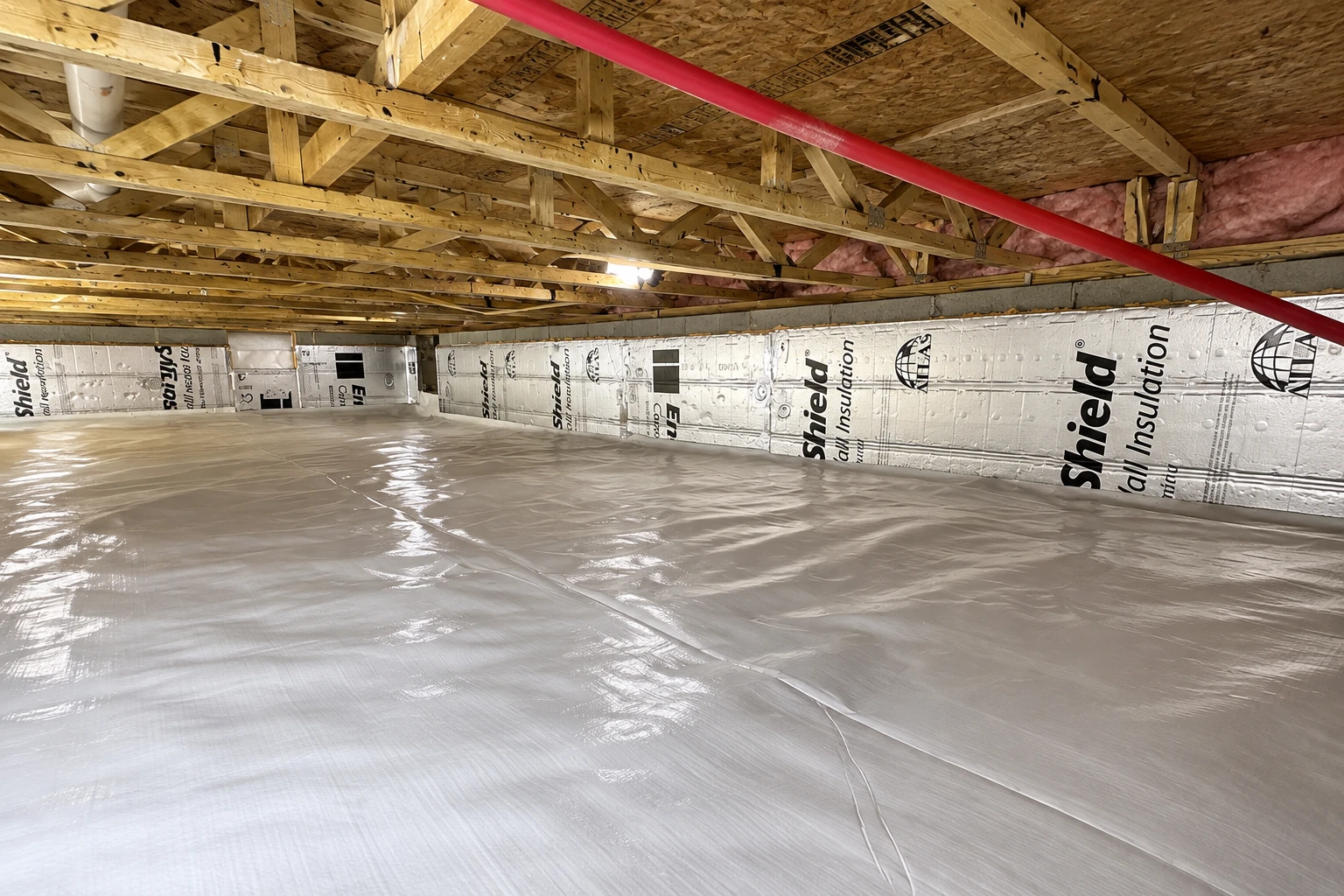
A crawl space vapor barrier is a heavy plastic sheet laid over the dirt floor and sealed to the foundation walls and the piers, the posts holding up your house, so water and damp air from the ground stay out of the crawl space. Here in Bel Air South, MD, it does that job whether your crawl space has vents or is closed off.
Most folks call us because something down there feels off. Maybe a musty smell drifts up through the floor, the floors run cold in winter, or the old plastic is torn, bunched up or missing. Usually the plastic isn't the whole story, and I'd rather find out why it's damp than sell you a sheet to lay over the problem.
The price moves with the size of the crawl space, how much has to come out before we start, whether there's a water problem to sort out first, how heavy a sheet you need, and whether you go with a plain ground cover or a fully closed crawl space. The schedule turns mostly on that water fix and on whether a permit or another licensed trade is part of the job. After I've looked, you get a written estimate that lays out each piece in order, so your own number is on paper before anything starts.
- Covers the whole dirt floor, overlapped and sealed at the seams, with no bare ground showing.
- Starts with where the water comes from, since plastic laid over a wet problem just hides it.
- Any wiring, plumbing or heating work the plan turns up goes to a licensed trade.
What happens after you call about a crawl space barrier in Bel Air South?
Here's how a crawl space job goes with us, from your first call to the walk-through at the end. I'm the one you'll see at the start and the finish, and our installers do the work in between.
Call or send us a note
Call (410) 836-5406 or use the form, and we'll set up a time for me to come look. It helps to know the rough size of the crawl space, whether it has vents, and what's stored or running down there.
I come out and look first
I go into the crawl space myself, look for where the water's getting in and ask a lot of questions. Then you get a written estimate that walks through what I'd do first and why, so you can see where the money goes before you decide anything.
Our installers do the work
Our installers work in the order we went over at the estimate, so the water problem gets dealt with before the sheet goes down. I check in on the job while they're at it.
I go over the finished job
Before we leave, I go over the crawl space with you, seams, edges and all. That way you'll know what it should look like the next time you or a repair tech crawls in.
What a crawl space vapor barrier looks like going in
These photos show the kind of work involved in covering a crawl space floor, from bare dirt to sealed sheeting. They're examples of the trade, so you know what to picture before anyone heads under your house.
A worker in protective gear sprays foam insulation into exposed roof framing.
An attic with loose yellow insulation filling the floor between wooden joists.
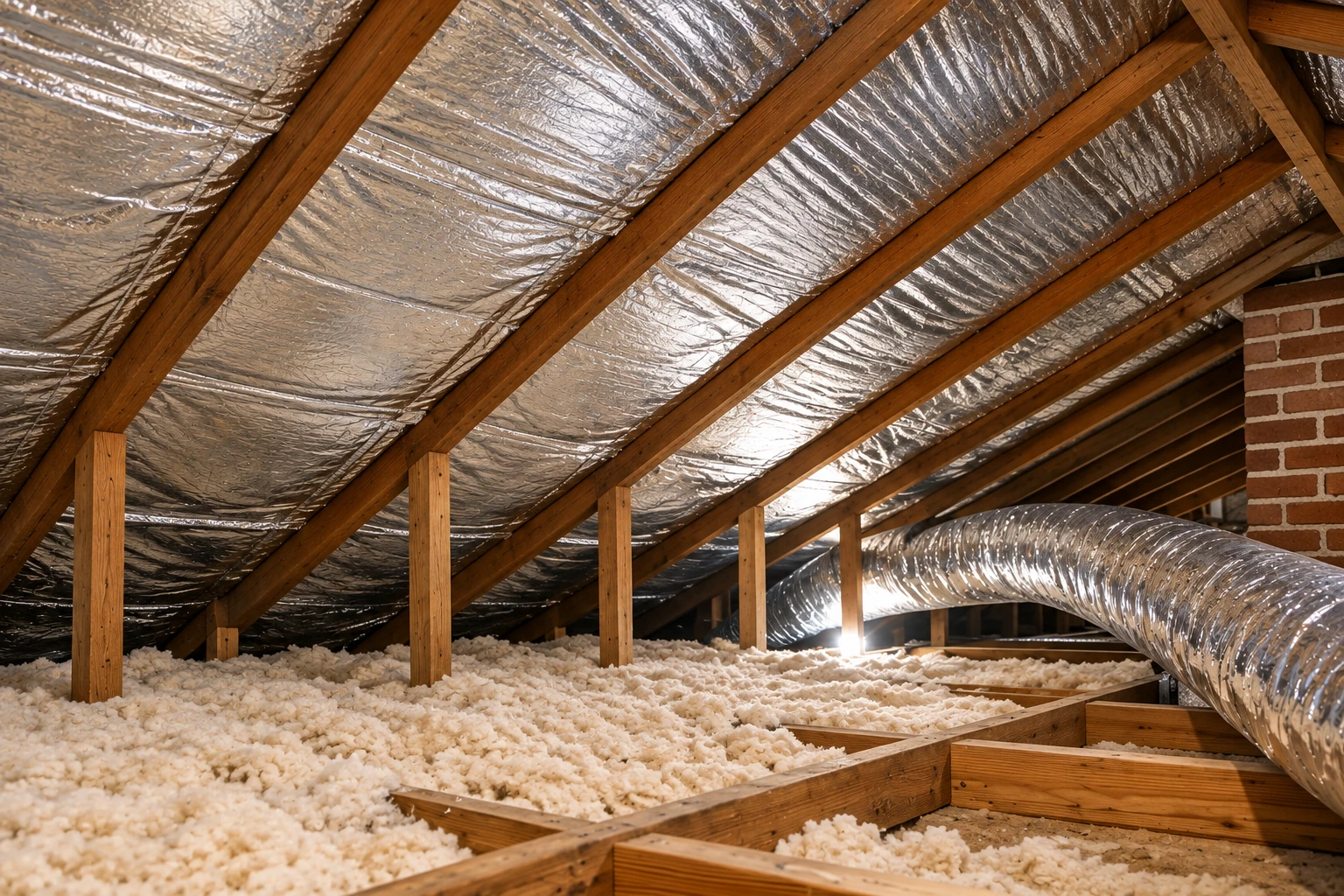
White blown-in insulation covers an attic floor beneath exposed wooden roof trusses.
A spacious attic has a deep layer of white loose-fill insulation across the floor.
A worker wearing a respirator uses a wide hose to remove loose insulation from attic floor joists.
Crawl space with a white plastic vapor barrier covering the floor and walls, with exposed joists, insulation, ducts, and pipes overhead.
Get a written estimate for your crawl space barrier
Send the form and we'll get back to you within one business day to set up a free visit, where I look at the crawl space myself. You get a written estimate with no obligation to go ahead.
(410) 836-5406Crawl space vapor barrier questions we hear around Bel Air South
These are the questions folks ask me most while we're standing at the crawl space door. If yours isn't here, call (410) 836-5406 and I'll answer it.
Do I need a vapor barrier if my crawl space has vents?
Yes, a ground cover does its job in a vented crawl space too, because it keeps water and vapor in the dirt from rising into the space. In vented crawl spaces, though, most of the moisture comes from water running toward the house through poor yard grading, missing drainage around the foundation or heavy lawn watering. So I look at how water reaches your foundation along with the plastic, not instead of it.
What is the best vapor barrier thickness for a crawl space?
Thin 6-mil plastic can do the job, but it needs protecting wherever people crawl in to service equipment, and thicker, reinforced sheeting is more durable. If a furnace, water heater or pump down there gets regular visits, that's the crawl space where I'd spend the extra money, as I mentioned above.
How much does crawl space encapsulation cost in Maryland?
Sealing a crawl space closed, what most folks call encapsulation, usually costs about $6,000 to $10,500 per job in Maryland. That's the going rate across the state, not our price, and a plain ground cover in a vented crawl space is usually a smaller job. Your own number comes down to the size, cleanup, water fix and sheeting I covered up top, and I'll price it on site and put it in writing.
Do I need a permit for a crawl space vapor barrier in Harford County?
A permit may be needed, and I check with the office that covers your address before any work starts. Harford County generally requires a permit to build or alter a structure, and also to install or alter equipment its county code regulates, so if a permit is needed for your job, we take care of it. If the plan adds wiring, a master electrician licensed in Harford County applies for the electrical permit at the county's Permit Center in Bel Air, so we bring in a licensed electrician for that part, and we're licensed and fully insured ourselves.
How do I get my crawl space ready for a vapor barrier?
Get your stored items out of the crawl space, because the sheet has to cover the whole floor and boxes sitting on the dirt leave gaps. Take out whatever you want to keep, and we'll deal with the debris and old plastic during the job.
Should I call my pest control company before closing my crawl space?
Yes, if you're on a pest treatment plan, check with them before the crawl space gets closed in. It's worth confirming that the closed system leaves their treatment and any warranty that comes with it intact, and it's a lot easier to ask now than after the sheeting is sealed.