
Blown-in insulation in Bel Air South MD - an attic that holds heat and still breathes
Upstairs too hot, floors too cold, power bill climbing? A sealed attic floor under an even layer of blown-in fill usually evens things out.
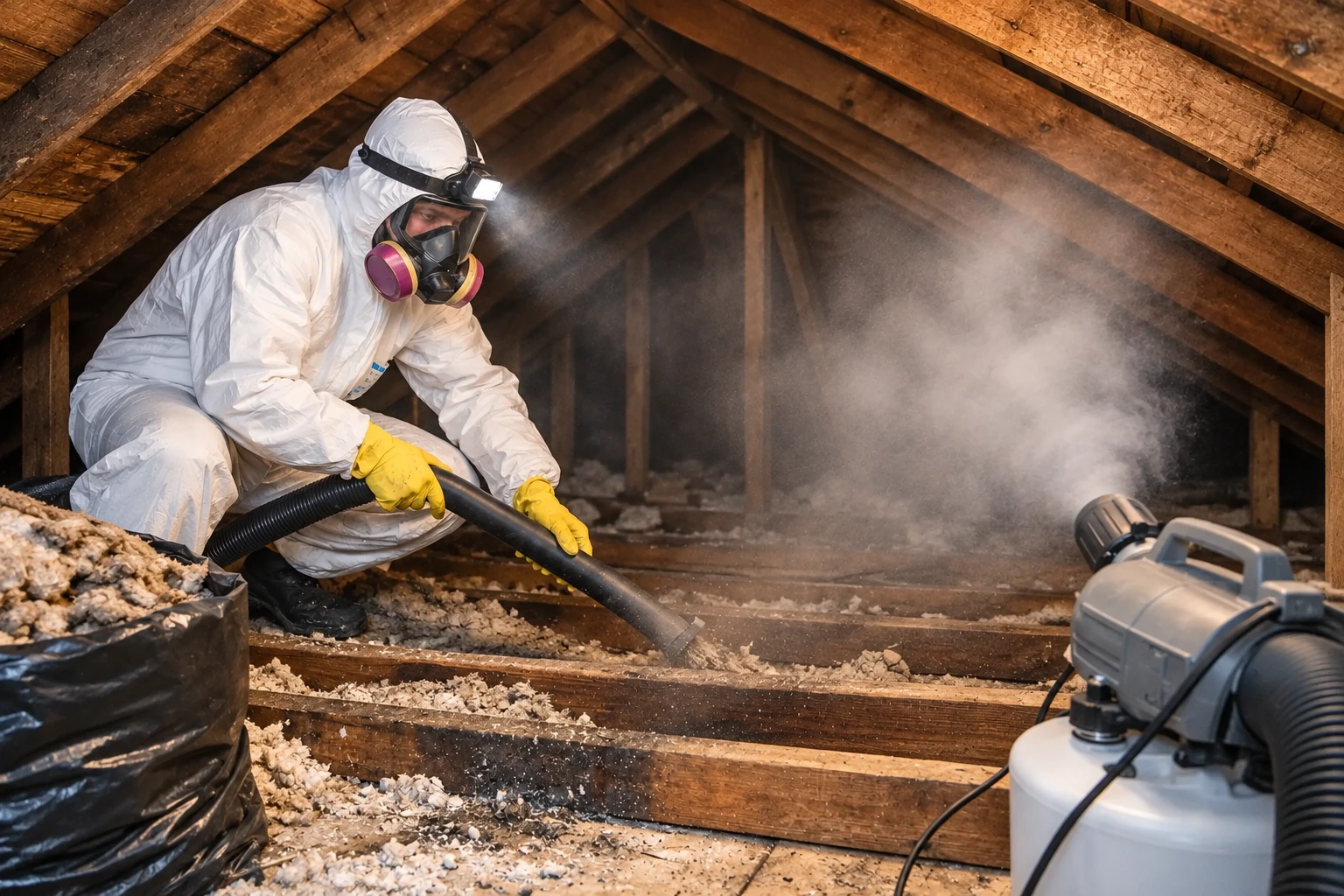
Is blown-in insulation right for your attic in Bel Air South?
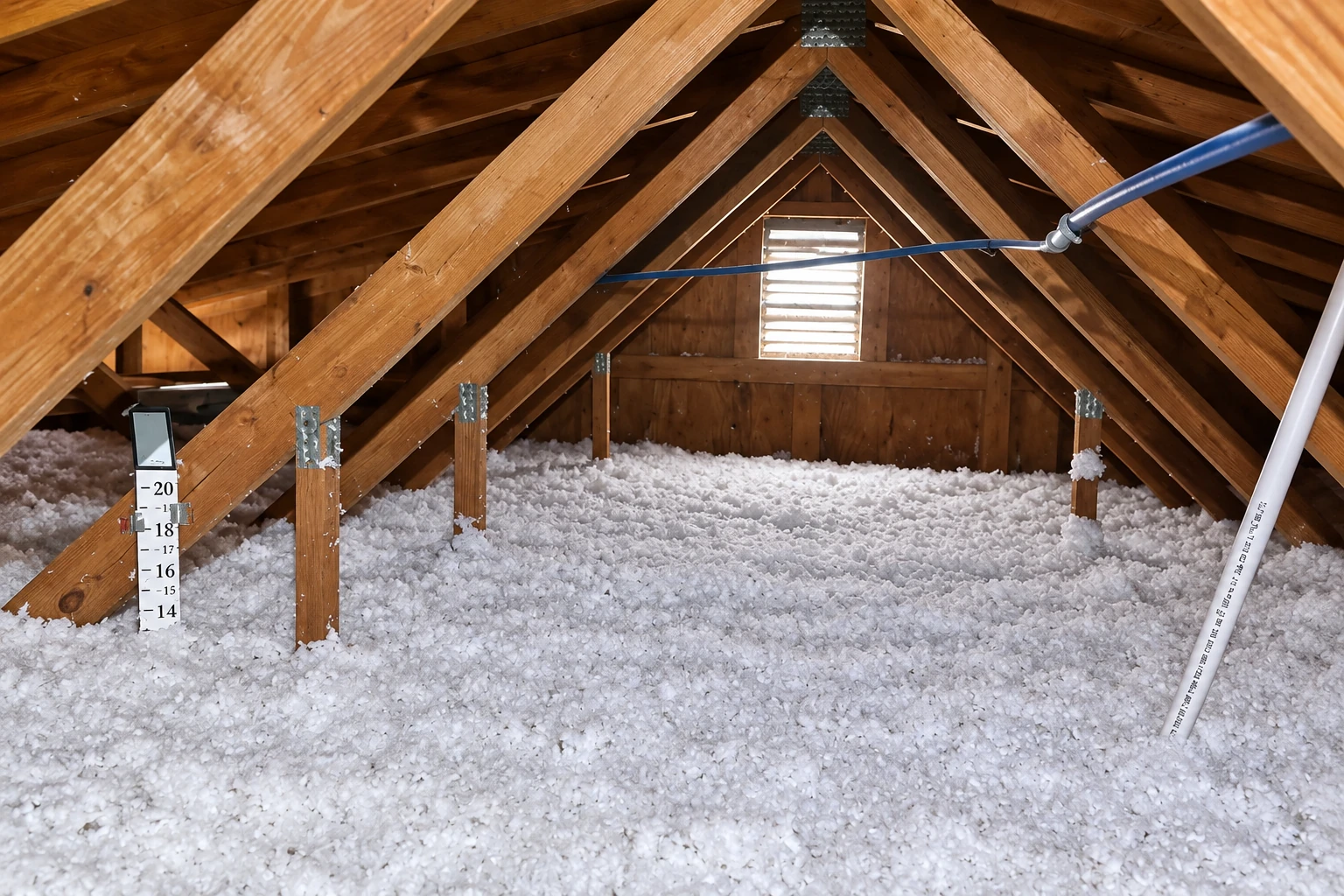
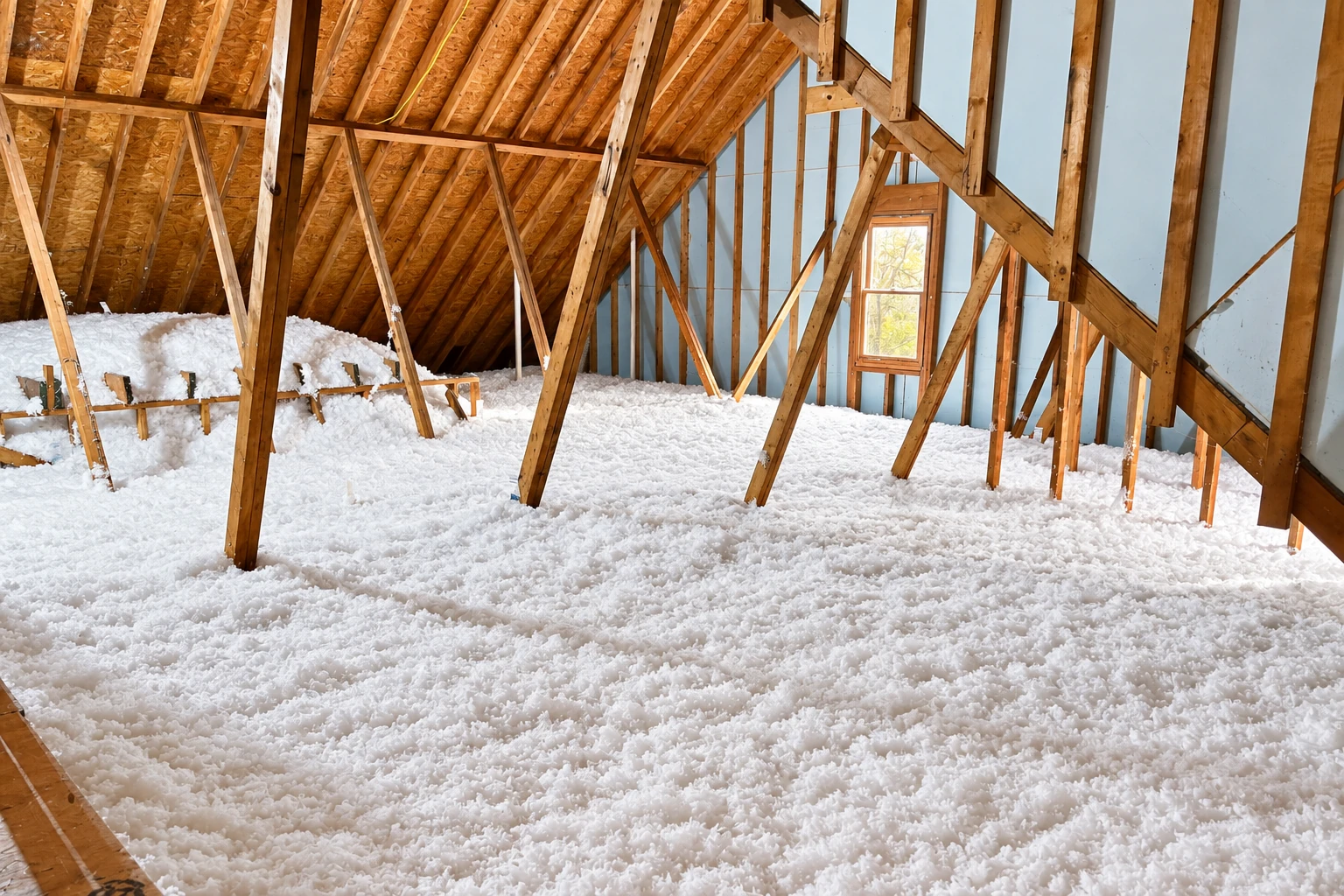
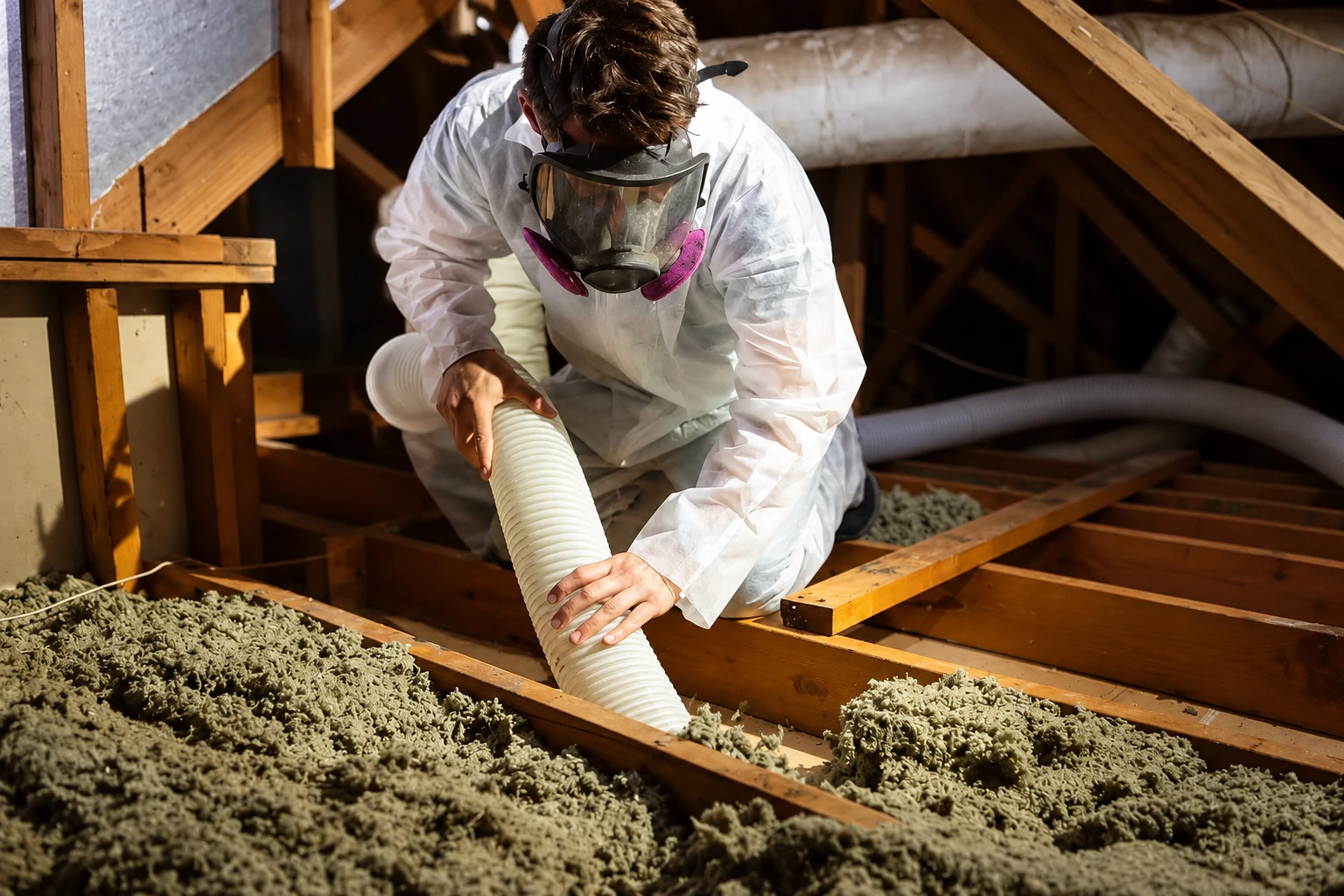
Blown-in insulation is loose fill, usually cellulose or fiberglass, blown through a hose across the floor of a vented attic so your ceiling slows heat on its way in and out. At Bel Air South Spray Foam Insulation, it's what we reach for when an attic in Bel Air South, MD has gone thin and the upstairs never feels right.
Most calls start the same way. The room over the garage is an oven in July, the upstairs hall is drafty in January, and the power bill doesn't add up for the size of the house. Usually there's a few inches of old fill up there that's packed down or pushed around, and air leaking up through gaps in the ceiling is doing as much harm as the thin layer, which is why I look before I quote and why attic air sealing usually comes first.
The price mostly moves with the size of the attic floor, how much old fill is already there and whether any of it has to come out, how many gaps need closing, and how easy the attic is to get into. The schedule turns on the same things, plus anything the first look turns up, like a roof leak or wiring that has to be dealt with before we cover the floor, and the written estimate lays out what I'd do first and why so you see it before anything starts.
- We tell you how many inches are already up there and whether it's worth topping up.
- The age of your house tells me a lot about what's likely hiding under the old fill.
- Gaps around pipes, wires and the attic hatch get closed first, so the fill isn't fighting drafts.
What happens after you call us about blown-in insulation?
Here's how a blown-in job goes with us, from the first call to the walk-through at the end. I'm the one you'll see at the start and the finish, and our installers handle the work in between.
Call or send us a note
Call (410) 836-5406 or use the form, tell us what's going on upstairs, and we'll get back to you to set up a visit. If you know about recessed lights or a roof leak, mention it, because both change what I look for.
I come look at the attic
I come out myself, check how many inches are up there and what shape they're in, ask a lot of questions and walk you through what I'd do first and why. You get a written estimate, and if topping up isn't worth the money in your house, I'll tell you that instead.
Our installers do the work
Our installers follow the order we agreed on, so anything the visit flagged gets handled before the attic floor gets covered, and I check in while they're at it. We clean up before we pack the truck.
We go over it together
When it's done I walk the finished job with you, and you're welcome to poke your head up through the hatch and see the edges and eaves for yourself. Satisfaction guaranteed on every job.
What blown-in insulation looks like in an attic
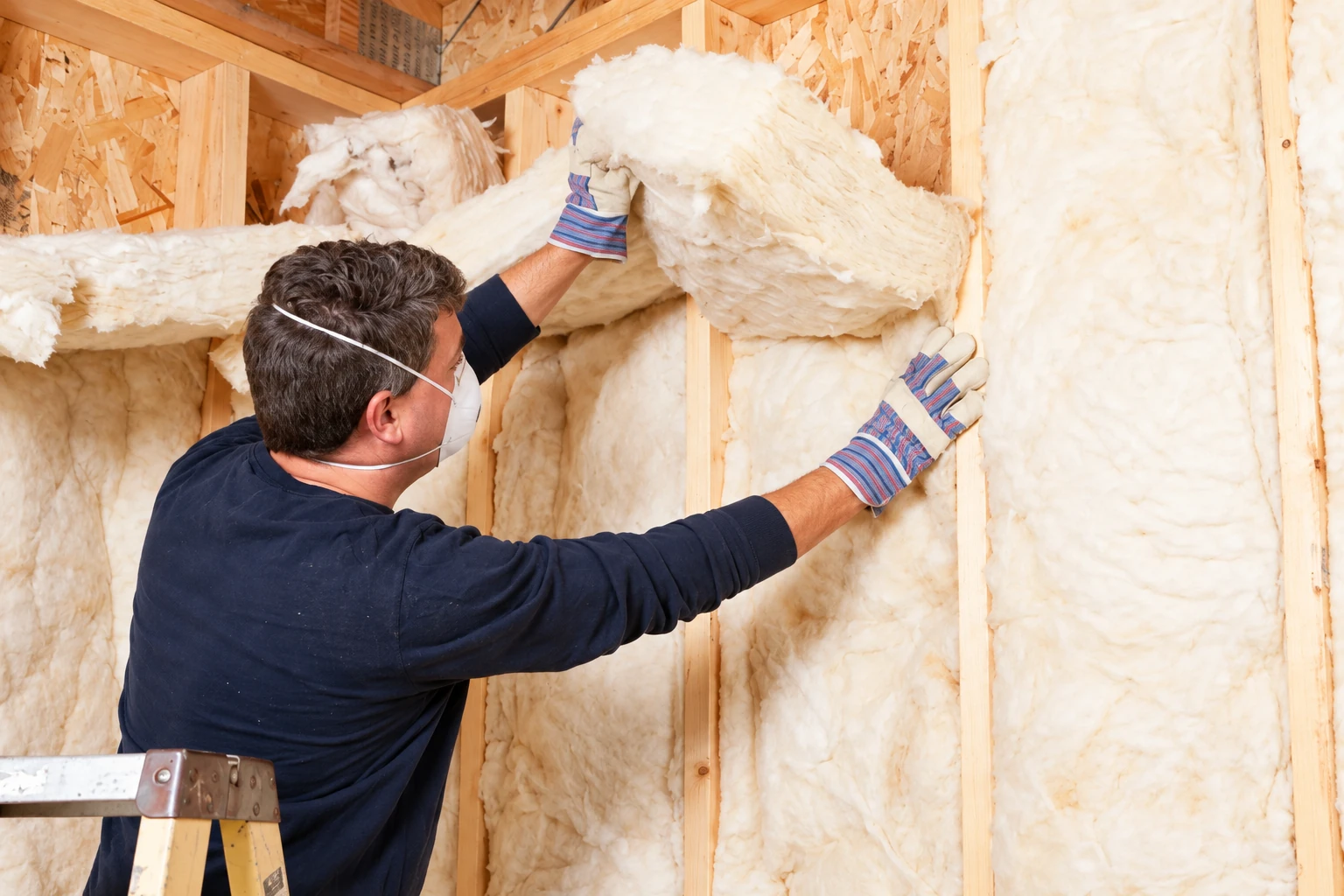
A few pictures of blown-in insulation and the attic work around it, so you know what you're looking at when you poke your head through the hatch. They show the trade in general, not one particular house.
A worker in protective gear sprays foam insulation into exposed roof framing.
An attic with loose yellow insulation filling the floor between wooden joists.
Crawl space with a white plastic vapor barrier covering the floor and walls, with exposed joists, insulation, ducts, and pipes overhead.
Pink fiberglass batts fill the framed walls of an unfinished basement beneath exposed ceiling joists.
Close view of foam sealing the spaces between exposed wooden ceiling joists.
Gray mineral wool insulation fills wooden wall framing above a concrete basement foundation.
Get a written estimate for blown-in insulation in your attic
Send the form or call (410) 836-5406 and we'll reply within one business day to set up a free on-site estimate, with no obligation. I'll look at your attic with you, then you get it in writing.
(410) 836-5406Questions people ask about blown-in insulation in Bel Air South
These are the questions I hear most when I'm standing in someone's hallway looking up at the attic hatch. If yours isn't here, ask me when I come out.
How much does blown-in insulation cost in the Baltimore area?
Blown-in insulation in the Baltimore area usually costs about $1,200 to $2,500 per job, and that's the going rate around the region, not a quote from us. Where your attic lands depends on its size, how much old fill has to stay or go and how much sealing it needs, and your own figure comes on the written estimate after I've seen it.
How do I get help paying for attic insulation in Bel Air South?
If you're a residential BGE customer, you can apply for BGE's Home Performance rebates through the Home Performance with ENERGY STAR Program, working with a participating contractor, so have your BGE account number handy. Their rules say air sealing has to be finished before insulation goes in, and most projects need programmable ventilation to meet indoor air quality standards. Lower-income households served by an EmPOWER utility can also look at the Maryland Department of Housing and Community Development's Low Income Energy Efficiency Program, which helps install energy-saving measures with nothing out of pocket.
What gets checked in the attic before blown-in insulation goes in?
Before any sealing or fill, the attic gets checked for live knob and tube wiring, vermiculite insulation and roof leaks. I also look for bathroom fans blowing into the attic instead of outside, and for unvented kerosene heaters or gas fireplaces, so those get planned for before new insulation covers the floor. If something calls for electrical, plumbing or heating work, we bring in a licensed trade for that part.
Does blown-in insulation settle over time?
Blown-in fill can settle over time, and on its own it stops less air leakage than spray foam does. That's the reason we seal the attic floor before the fill goes down and keep the layer even out to the walls.
How do I keep blown-in insulation away from recessed lights?
Unless a can light is rated IC, short for insulated ceiling, the insulation should stay clear of it, and with loose fill a sheet metal barrier goes around the opening to hold it back. I check every can light while I'm up there, so it helps to tell me roughly how many you've got upstairs.
What insurance should a home improvement contractor in Maryland carry?
Maryland requires licensed home improvement contractors to show proof of current $50,000 liability insurance and keep it in effect at all times. We're licensed and fully insured, and you're welcome to ask me about it when I come out.